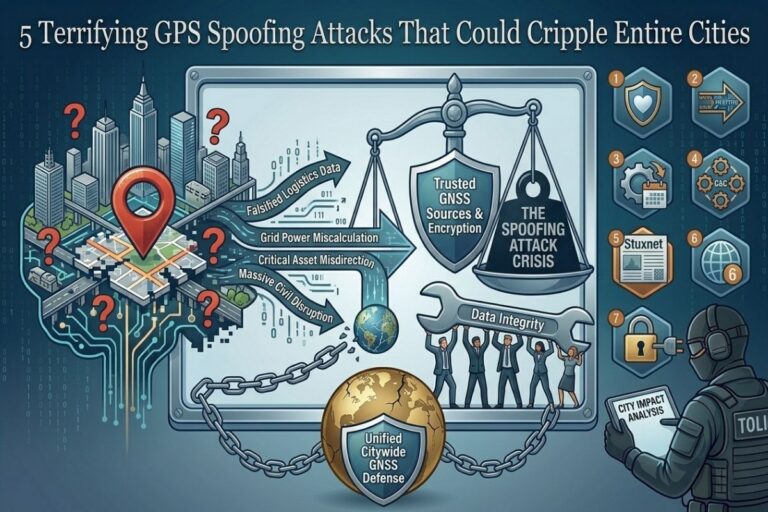
Most people trust GPS systems without thinking twice.
Drivers follow navigation apps automatically. Aircraft rely on satellite positioning systems for routing. Emergency responders depend on location accuracy during life threatening situations. Financial systems quietly depend on satellite timing synchronization every second of every day.
That trust creates vulnerability.
GPS spoofing is no longer some obscure cybersecurity theory discussed only inside military briefings and intelligence circles. It is rapidly becoming one of the most dangerous infrastructure cyber threats modern society faces.
And most people have absolutely no idea how vulnerable they really are.
Hackers do not need to destroy a city physically to create chaos inside it. Sometimes all they need to do is manipulate the signals people depend on to navigate reality itself.
At filecorrupter.org, we focus on the cyber threats most people ignore until the consequences become impossible to avoid. GPS spoofing belongs at the top of that list because the attack surface is enormous, the consequences are serious, and modern civilization depends heavily on systems many people barely understand.
The terrifying part is this:
Most cities are not prepared for large scale GPS manipulation attacks.
What Is GPS Spoofing?
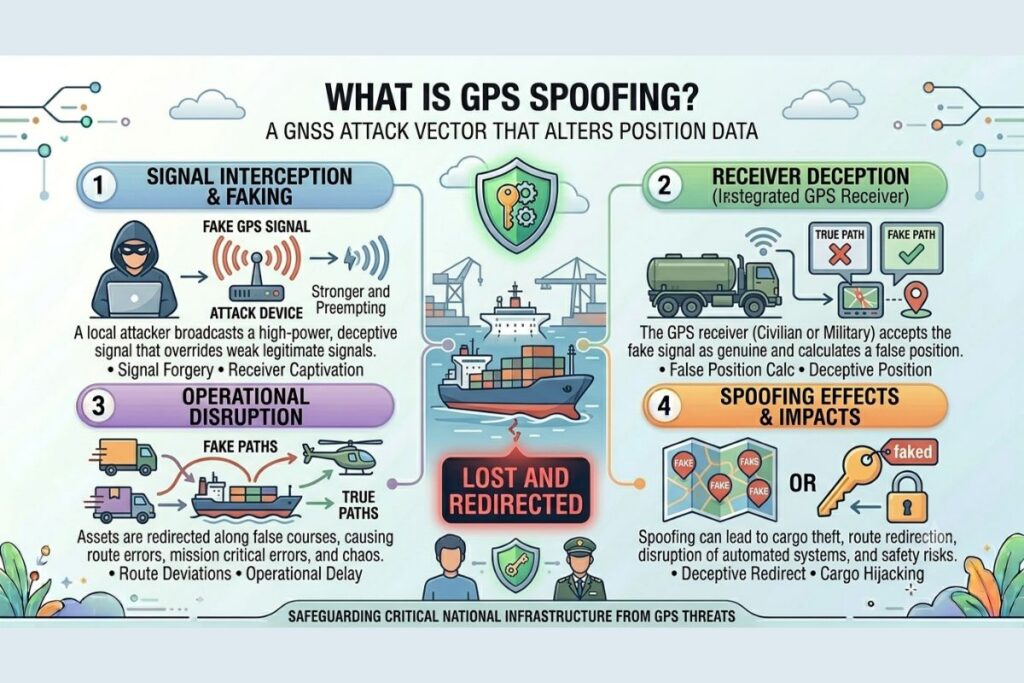
GPS spoofing occurs when attackers transmit fake GPS signals to deceive devices into calculating false location or timing information.
Instead of receiving legitimate satellite positioning data, systems receive manipulated coordinates controlled by an attacker.
The result can be devastating.
Vehicles may navigate incorrectly. Aircraft may receive inaccurate positioning data. Ships can drift off course. Emergency response units may be redirected. Financial systems relying on timing synchronization may experience disruption.
Unlike traditional hacking, GPS spoofing attacks manipulate trust itself.
The system still appears operational.
The device still believes it is functioning correctly.
The victim often has no idea the data is fake.
According to CISA guidance on GPS cybersecurity threats, positioning, navigation, and timing systems remain critical infrastructure components vulnerable to disruption and manipulation.
That should concern everyone.
Also Read: Technology Ethics and Accountability: The AI Responsibility Crisis
Why GPS Spoofing Is Becoming More Dangerous
Modern cities depend heavily on synchronized digital infrastructure.
Transportation systems.
Emergency response coordination.
Banking systems.
Logistics operations.
Traffic management.
Power grids.
Telecommunications.
Many of these systems rely directly or indirectly on GPS signals.
This creates a dangerous reality:
A successful GPS spoofing campaign could create widespread disruption without attackers ever physically entering the target city.
That is the evolution of modern cyber warfare.
Infrastructure attacks are becoming more strategic because attackers increasingly understand how interconnected digital systems really are.
The more dependent society becomes on invisible technology, the more dangerous signal manipulation becomes.
Aircraft Navigation Systems Could Be Manipulated
One of the most frightening GPS spoofing scenarios involves aviation systems.
Modern aircraft rely heavily on satellite navigation systems during flight operations. Pilots use GPS assisted routing for navigation efficiency, positioning awareness, and operational coordination.
Now imagine attackers feeding false positioning data into those systems.
The implications become terrifying immediately.
Aircraft could:
- drift off intended routes
- receive inaccurate location information
- experience navigation confusion
- encounter landing coordination problems
- suffer operational delays
According to NASA cybersecurity initiatives, protecting critical navigation infrastructure has become increasingly important as cyber threats targeting transportation systems continue evolving.
Aviation cybersecurity is no longer optional.
It is essential infrastructure defense.
Emergency Response Systems Could Collapse During Crisis
This is where GPS spoofing becomes deeply personal rather than purely technical.
Emergency responders depend heavily on accurate navigation and positioning systems during disasters, medical emergencies, terrorist incidents, and large scale crises.
Police units.
Fire departments.
Ambulances.
Disaster response teams.
All rely on location accuracy.
A coordinated GPS spoofing attack during a major emergency could:
- misdirect ambulances
- delay rescue operations
- interfere with evacuation coordination
- confuse emergency routing systems
- isolate response teams
During life threatening situations, minutes matter.
Cybercriminals and nation-state attackers understand this.
This is why infrastructure cybersecurity is becoming inseparable from public safety itself.
Cyberattacks are no longer just digital inconveniences.
They now carry the potential to affect human survival directly.
Financial Systems Quietly Depend on GPS Timing
Most people never realize how much modern banking systems rely on GPS timing synchronization.
Financial institutions use highly precise timing systems to:
- validate transactions
- synchronize trading platforms
- coordinate payment processing
- manage digital communications
- maintain operational consistency
GPS infrastructure helps maintain that timing accuracy.
Disrupt those signals, and financial instability becomes possible.
A successful GPS spoofing attack targeting financial infrastructure could:
- delay transactions
- interfere with banking operations
- disrupt stock exchanges
- create synchronization failures
- trigger operational confusion
Modern economies depend heavily on invisible timing infrastructure functioning continuously behind the scenes.
Attackers increasingly recognize that disrupting infrastructure creates more impact than simply stealing information.
That is why GPS spoofing deserves serious attention from cybersecurity professionals worldwide.
Smart Cities Could Become Smart Targets
The rise of smart city technology introduces another major cybersecurity concern.
Cities increasingly rely on interconnected systems powered by:
- automated traffic systems
- IoT devices
- smart infrastructure
- digital transportation networks
- wireless communication platforms
- sensor based management systems
Many of these technologies depend on GPS synchronization and location services.
This creates enormous attack potential.
Imagine attackers manipulating:
- traffic flow systems
- public transportation routing
- delivery logistics
- autonomous vehicle navigation
- emergency dispatch coordination
A city does not need to experience a total blackout to experience chaos.
Strategic disruption of synchronized systems could create widespread confusion rapidly.
The smarter cities become, the larger the cyberattack surface grows.
Military And Nation-State GPS Attacks Are Increasing
GPS spoofing is already recognized as a serious geopolitical concern.
Military operations depend heavily on positioning systems for:
- navigation
- targeting
- communication coordination
- surveillance
- operational logistics
Countries worldwide understand that disrupting positioning systems could weaken military readiness without traditional combat engagement.
According to European Space Agency cybersecurity research, cyber resilience for navigation systems is becoming increasingly important as space infrastructure grows more integrated into civilian and military operations.
This means GPS spoofing is no longer just a criminal concern.
It is now part of modern cyber warfare strategy.
The battlefield has expanded into invisible infrastructure.
Most People Would Never Know They Were Under Attack
One of the most dangerous aspects of GPS spoofing is psychological.
Victims often believe the system is functioning normally.
The navigation still works.
The device still responds.
The data still appears legitimate.
That illusion creates delayed detection.
Attackers understand that manipulating trust can be more effective than destroying systems openly. Quiet infrastructure manipulation often creates more confusion than obvious disruption.
This is what makes GPS spoofing such a dangerous modern cyber threat.
It weaponizes invisibility.
And most civilians would never recognize the attack until the consequences become severe.
Why GPS Spoofing Will Continue Growing
Cybercriminals follow dependency.
The more society depends on digital infrastructure, the more valuable infrastructure manipulation becomes.
GPS systems now support:
- transportation
- logistics
- aviation
- emergency response
- telecommunications
- military operations
- banking infrastructure
- smart city technology
That makes GPS spoofing a highly attractive attack vector.
As cities continue becoming more digitally interconnected, the potential impact of signal manipulation attacks grows exponentially.
The future cyber battlefield will not always involve malware destroying systems directly.
Sometimes attackers will simply manipulate reality itself by feeding false data into the infrastructure society depends on most.
That future is already beginning.
Frequently Asked Questions
What is GPS spoofing?
GPS spoofing is a cyberattack where fake GPS signals are transmitted to deceive systems into calculating false location or timing information.
Can GPS spoofing affect civilians?
Yes. GPS spoofing can impact civilian transportation systems, smartphones, emergency response operations, banking systems, shipping routes, and aviation infrastructure.
Why is GPS spoofing dangerous?
GPS spoofing can disrupt navigation systems, delay emergency services, interfere with financial infrastructure, manipulate transportation systems, and create large scale operational confusion.
Is GPS spoofing used in cyber warfare?
Yes. Nation-state actors and military organizations recognize GPS spoofing as a strategic cyber warfare capability capable of disrupting infrastructure and operational coordination.
Final Thought
Most people assume GPS systems are reliable because they have become part of everyday life.
That assumption may become one of modern society’s biggest cybersecurity weaknesses.
The infrastructure powering cities, transportation systems, emergency response operations, financial institutions, and military coordination depends heavily on satellite positioning and timing systems functioning accurately every second of every day.
That dependency creates opportunity.
And attackers are paying attention.
The next major cyberattack may not involve ransomware locking files inside a company network. It may involve manipulating the invisible signals guiding modern civilization itself.
GPS spoofing represents a dangerous evolution in cyber warfare because it attacks trust, infrastructure, and reality simultaneously.
And most cities are nowhere near prepared for what happens when those signals can no longer be trusted.
Explore More Free Tools
Hash Generator Tool
Generate secure MD5, SHA1, SHA256, and other cryptographic hashes instantly online.
Open Tool →Dummy File Generator
Create sample dummy files of custom sizes for testing uploads, storage, and applications.
Open Tool →Password Strength Checker
Analyze password security and identify weak passwords before using them online.
Open Tool →File Hash Checker
Verify file integrity by checking MD5, SHA256, and other file hash signatures.
Open Tool →UUID Generator
Generate random UUIDs and unique identifiers instantly for apps, APIs, and databases.
Open Tool →Text Diff Checker
Compare two text blocks side by side and quickly detect additions, deletions, and edits.
Open Tool →