In a world where data breaches are as common as Monday morning coffee spills, quantum cryptography and quantum computing are stepping up to the plate—and they’re ready to knock it out of the park. But how do these two heavyweights shake up the realm of cybersecurity? Buckle up as we explore the thrilling intersection of quantum technology and cryptography!
What’s the Deal with Cryptography?
Cryptography has traditionally been our trusted shield against digital attacks. Think of it as the ancient art of sending secret messages where only your best buddy could decipher the code. But as computers advance—particularly with the advent of quantum leaps (pun intended)—our old faithful cryptographic methods are beginning to show their age.
📌 Recommended Reading
Cybersecurity Policies Guide: Build a Strong Security CultureQuantum’s Impact on Cryptography
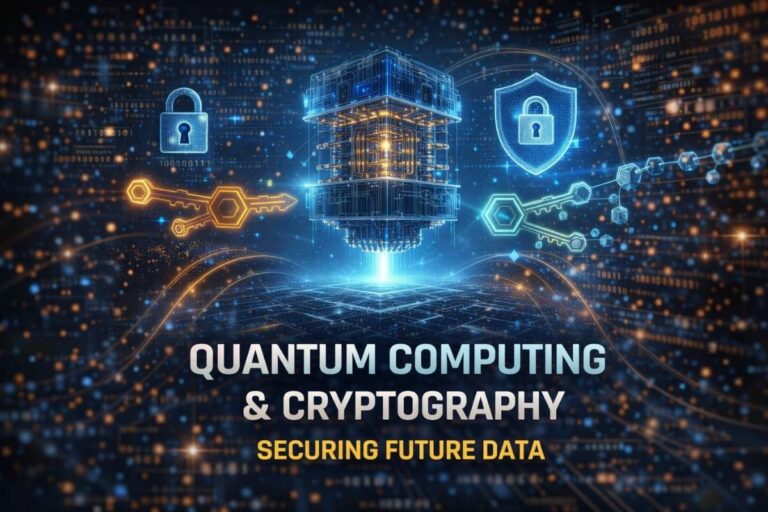
What happens when you mix quantum computing with cryptography? A world of new possibilities—and hefty challenges. Quantum computers can process massive amounts of data incredibly fast, posing a significant threat to current encryption methods. Why? Because they can crack traditional encryption faster than you can say “data breach!”
Enter Quantum-Resistant Algorithms
Here comes the game-changer: quantum-resistant algorithms. As cyber threats evolve, so must our defenses. Researchers are busy developing new cryptographic techniques designed to withstand attacks from quantum computers. These algorithms are like the superheroes of data security—ready to rise to the occasion when traditional methods falter.
Real-World Applications
Imagine a world where your sensitive data—such as financial information or personal records—can be securely transmitted through a quantum network. Industries from finance to healthcare are exploring quantum cryptography to safeguard their data. If you thought locking your doors was enough, think again—this is the next level of protection.
Looking Ahead: The Future of Quantum Cryptography
As quantum technology continues to evolve, the landscape of cybersecurity will shift dramatically. Companies that invest in quantum-resistant encryption will not only stay ahead of the curve but also protect their data from emerging quantum threats.
Are We Ready for Quantum Security?
The real question remains: Are we ready to embrace these changes? Transitioning to quantum security involves careful planning and preparation, but the benefits are undeniably worth it.
Final Thought
The intersection of quantum cryptography and quantum computing is significantly shaping the landscape of digital security, offering unprecedented opportunities for a more secure future. As we delve into this intricate relationship, businesses can refine their cybersecurity strategies, ensuring a robust defense against evolving threats. By adopting quantum technologies, organizations not only bolster their defenses but also foster trust with customers who are increasingly aware of data security concerns.
Embracing the quantum revolution is not just an option—it’s a necessity in today’s high-stakes digital environment. As we stand on the brink of this transformative era, harnessing the power of quantum innovations becomes essential for maintaining data integrity. The potential to counteract cyber threats and safeguard sensitive information is unparalleled. After all, in this collective endeavor, we all share the responsibility for protecting our digital world. Together, we can build a safer tomorrow, united in our pursuit of innovative security solutions.
Q&A 1:
Q: What is quantum cryptography, and how does it work?
A: Quantum cryptography is a cutting-edge method of securing data using the principles of quantum mechanics. It relies on the behavior of qubits to transmit information securely. If anyone tries to intercept the data, the quantum state changes, rendering the information useless. Essentially, it’s like sending messages in a hyper-secure envelope that alerts you if anyone tries to peek inside!
Q&A 2:
Q: How does quantum cryptography differ from traditional encryption methods?
A: Traditional encryption relies on mathematical algorithms that can be cracked with enough computing power—think of it like a lock that can eventually be picked. Quantum cryptography, on the other hand, leverages the laws of physics to provide an unbreakable secure communication channel. It ensures that no matter how advanced a hacker’s tools are, they’ll never be able to eavesdrop without getting caught!
Q&A 3:
Q: What industries will benefit most from quantum cryptography?
A: Industries that handle highly sensitive data, such as finance, healthcare, and government, stand to gain the most from quantum cryptography. For example, in finance, quantum cryptography can protect transactions and customer information. In healthcare, it ensures patient records remain confidential. As quantum technology matures, we’ll see its benefits expand across various sectors, securing our digital future.
Quiet Hacker
Why Did the Quantum Computer Cross the Road?
To factor the other side! (Okay, maybe not the best joke, but you get the point!)! 😄