Data Ownership Is the Biggest Illusion on the Internet
Data Ownership sounds simple.
You create your information.
You own your information.
That is what most people believe.
It is also one of the most successful illusions of the digital age.
Every day, billions of people generate enormous amounts of information. They search for answers, send messages, upload photos, share opinions, purchase products, watch videos, and move through a world filled with connected devices.
Most assume they control what belongs to them.
Yet companies collect it.
Advertisers analyze it.
Data brokers package it.
Artificial intelligence systems learn from it.
Governments request it.
Cybercriminals steal it.
The uncomfortable reality is that your information moves through countless hands long after you create it.
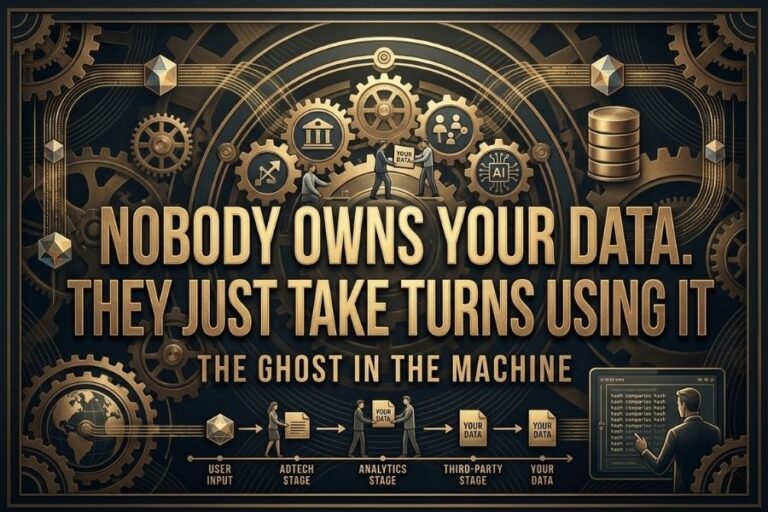
Nobody owns your data.
They just take turns using it.
That statement may sound dramatic.
Unfortunately, it is becoming harder to argue against.
Data Ownership Is Not the Same as Data Control
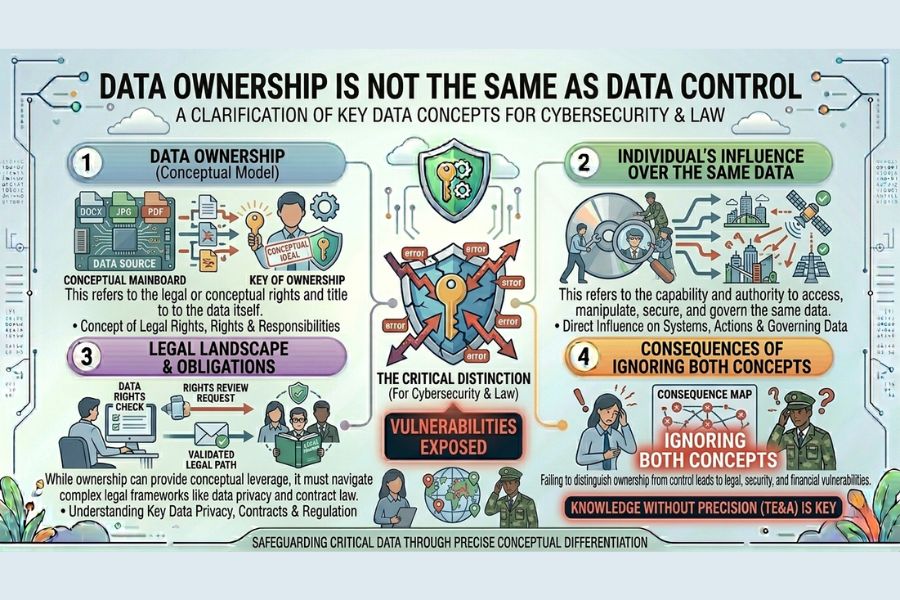
The first mistake people make is assuming ownership and control mean the same thing.
They do not.
Imagine owning a house but allowing hundreds of strangers to enter, copy its contents, photograph every room, and share what they discover with others.
Technically, you still own the house.
Practically, your control has been reduced.
The same principle applies to information.
You may create your data, but once it enters digital ecosystems, your influence over that information often begins to shrink.
Terms of service agreements grant permissions.
Applications request access.
Platforms collect behavioral insights.
Third parties receive information through partnerships and advertising relationships.
Ownership remains an appealing concept because it suggests authority.
Control is what actually matters.
The digital world is full of people who technically own information they no longer meaningfully control.
Also Read: Nobody Stops Civilian Hackers From Joining a War
Your Data Has More Than One Customer
Many people think their relationship with a platform involves only two participants.
The user and the company.
The reality is often more complex.
Data can move through extensive ecosystems involving advertisers, analytics providers, marketing firms, cloud services, partners, and countless other entities.
A single interaction may create multiple forms of value.
Your activity helps improve targeting.
Your behavior contributes to analytics.
Your preferences influence recommendations.
Your engagement generates revenue.
In many cases, your information becomes useful to organizations you have never directly interacted with.
This is why modern privacy discussions can become so complicated.
Information rarely stays where it starts.
The internet was designed to connect systems.
Data naturally follows those connections.
The result is an environment where information frequently has more than one audience and more than one customer.
Use Our File Corrupter Tools: File Corrupter – Corrupt Any File Online in Seconds
The Business Model Is Information
Many people believe they are using free services.
In some cases, that belief deserves a closer look.
Operating massive digital platforms requires enormous resources. Infrastructure, development, security, storage, and maintenance all cost money.
When users are not paying directly, companies often seek value elsewhere.
Information has become one of the most valuable resources in the modern economy.
Understanding consumer behavior creates opportunities.
Understanding preferences creates opportunities.
Understanding habits creates opportunities.
The ability to predict future behavior is especially valuable.
This is why information collection sits at the center of so many business models.
Data has become an economic asset.
Organizations invest billions of dollars collecting, organizing, analyzing, and protecting it.
The value of information explains why companies work so hard to acquire it and why cybercriminals work so hard to steal it.
The modern economy runs on data.
Many people participate in that economy without fully realizing it.
Data Brokers Know More Than You Think
Few industries surprise people more than the data broker industry.
Many individuals have never heard the term.
Yet these organizations can maintain extensive profiles built from numerous sources.
Public records.
Commercial transactions.
Marketing databases.
Consumer activities.
Online interactions.
The average person often assumes that information scattered across different systems remains disconnected.
That assumption is frequently wrong.
Information becomes more valuable when it is combined.
A single piece of data may reveal little.
Thousands of data points can reveal patterns, preferences, habits, relationships, and behaviors.
That is where the real power emerges.
The issue is not simply collection.
The issue is aggregation.
Pieces become profiles.
Profiles become insights.
Insights become influence.
For anyone interested in cybersecurity, understanding data brokers provides an important lesson about how information gains value over time.
Artificial Intelligence Changed Everything
Artificial intelligence has fundamentally changed the conversation around Data Ownership.
Previously, information was valuable because humans could analyze it.
Now machines can process enormous volumes of information at extraordinary speed.
Patterns emerge faster.
Relationships become easier to identify.
Predictions become more accurate.
Information that once appeared insignificant may become valuable when combined with advanced analytical capabilities.
This is why old data continues to matter.
Technology keeps finding new ways to extract value from existing information.
The information collected today may support uses that nobody has imagined yet.
That reality should force people to think differently about privacy.
The greatest risk is not always what organizations can do with your data now.
The greatest risk may be what they can do with it later.
The future often increases the value of information rather than decreasing it.
Why Data Ownership Feels Like an Illusion
At some point, every discussion about Data Ownership becomes philosophical.
What does ownership actually mean?
If a company stores your information, analyzes it, profits from it, and shares insights derived from it, how much control do you truly possess?
The answer varies depending on laws, jurisdictions, agreements, and technologies.
Yet the underlying question remains.
Many people feel ownership because they created the information.
Many organizations feel entitlement because they collected it.
Many advertisers see value because they can use it.
Many criminals see opportunity because they can exploit it.
The same information can simultaneously attract multiple interests.
That reality creates tension.
Ownership sounds absolute.
The modern information ecosystem is anything but absolute.
Control is fragmented.
Access is distributed.
Influence is shared.
The result is a system where ownership often feels more symbolic than practical.
Your Digital Identity Is a Valuable Asset
Most people underestimate the value of their digital identity.
Attackers do not.
Organizations do not.
Advertisers do not.
Governments do not.
Your digital identity influences financial decisions, marketing decisions, security decisions, and risk assessments.
It affects how systems interact with you.
It influences how organizations evaluate you.
It shapes the experiences presented to you online.
Every piece of information contributes to a larger picture.
This is one reason cybersecurity professionals consistently emphasize awareness and responsible information management.
The goal is not secrecy.
The goal is understanding.
Information has value.
Valuable assets deserve attention.
At FileCorrupter.org, we frequently explore how information, cybersecurity, and technology intersect because understanding modern security requires understanding the value of data itself.
The Future Belongs to Those Who Control Information
History has always rewarded those who control valuable resources.
Land.
Energy.
Capital.
Technology.
Information now belongs on that list.
The organizations capable of collecting, processing, protecting, and leveraging information possess enormous advantages.
This is why cybersecurity matters.
This is why privacy matters.
This is why Data Ownership matters.
The future will increasingly be shaped by information and the ability to use it effectively.
People who understand this reality gain an advantage.
People who ignore it become part of someone else’s dataset.
The digital age has created extraordinary opportunities.
It has also created extraordinary questions.
One of the biggest questions remains unresolved.
Who truly controls the information that defines modern life?
Frequently Asked Questions
What is Data Ownership?
Data Ownership refers to the rights, responsibilities, and control associated with information created, collected, or stored by individuals and organizations.
Why is Data Ownership important?
Data Ownership affects privacy, security, business practices, legal responsibilities, and individual control over personal information.
Do companies own my personal data?
The answer depends on laws, agreements, and jurisdictions. In many situations, companies possess rights to use, process, and store information even when individuals originally created it.
Why should cybersecurity professionals care about Data Ownership?
Because information is one of the most valuable assets in the digital world. Understanding who controls data helps organizations manage risk, security, and privacy more effectively.
Final Thought
The greatest myth of the digital age is that information belongs to the people who create it.
That belief feels comforting.
It feels fair.
It feels logical.
Reality is more complicated.
Every day information moves through systems, organizations, databases, algorithms, and networks that most people never see.
Some collect it.
Some analyze it.
Some profit from it.
Some protect it.
Some steal it.
That is why the question is no longer who owns your data.
The real question is who is using it right now.
Because in today’s world, nobody owns your data.
They just take turns using it.
References
National Institute of Standards and Technology (NIST)