
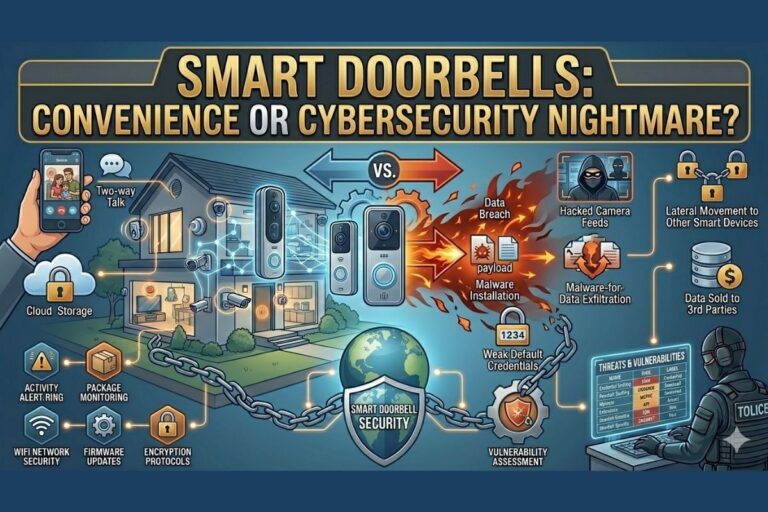
Your smart doorbell is supposed to make life easier. It alerts you when someone approaches your home, lets you communicate with visitors remotely, and even records every package drop-off. But convenience comes at a price most homeowners don’t realize.
Smart doorbell security is not just a technical problem—it’s a personal risk. Every device you connect to your home network is a potential entry point for cybercriminals. A compromised doorbell isn’t just about your privacy—it could expose your home to hackers who know your routines, habits, and when you’re away.
Millions of homeowners embrace these devices thinking they are safer. Few understand that the very device guarding their front door may be one of the weakest links in their digital security chain.
Why Smart Doorbells Are Everywhere
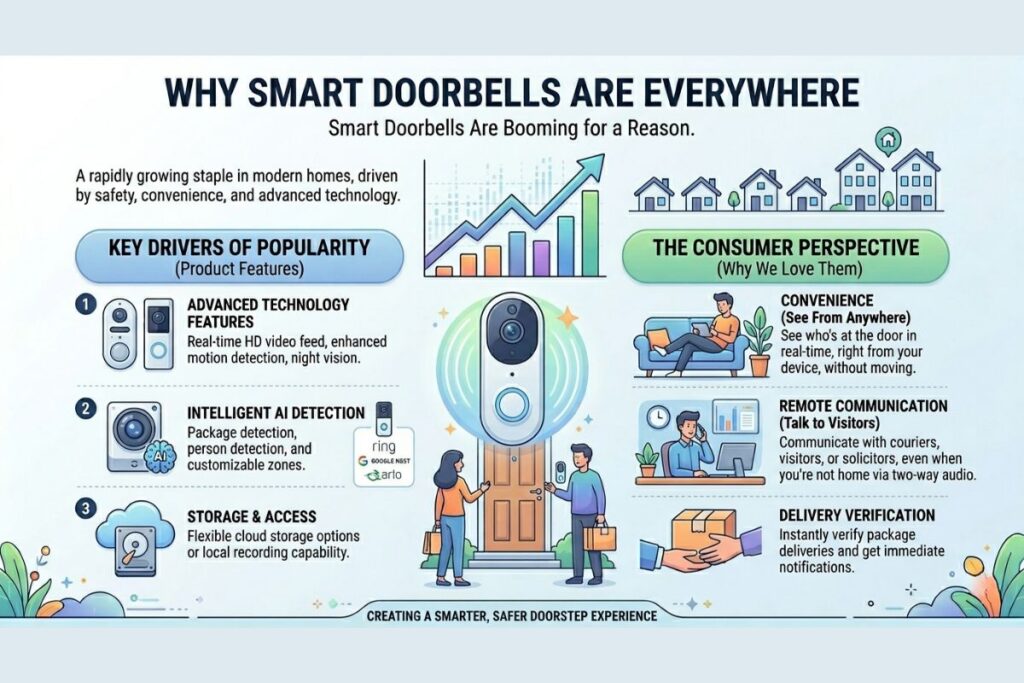
Smart doorbells are booming for a reason. They offer real-time video feeds, motion detection, cloud storage, and even AI-assisted features like package detection. Market leaders like Ring, Google Nest, and Arlo have made them household staples.
Consumers love them because they make life easier:
- See who’s at the door without leaving the couch.
- Verify deliveries in real-time.
- Communicate with visitors remotely.
Yet every connected feature is a double-edged sword. The more connected your home, the more attackers can exploit a weakness.
The Hidden Threat of Smart Doorbell Security
Most homeowners think hackers target corporations or government agencies. That assumption is dangerous. Cybercriminals know that smart doorbells are small, overlooked gateways into a home network. They don’t need to bypass enterprise firewalls—they target the devices people trust in their homes.
A compromised smart doorbell can expose:
- Video and audio of your front porch and home.
- WiFi network credentials.
- Cloud account access.
- Daily routines, travel schedules, and occupancy patterns.
For hackers, this is gold. The data allows them to plan physical break-ins, stalk homeowners, or even sell the information to other criminals.
Also Read: Smart Home Surveillance: 7 Shocking Privacy Risks You Must See
Real-World Hacks You Should Know
Several real-world incidents highlight why smart doorbell security is critical:
- In 2019, researchers discovered that thousands of Ring devices were exposed due to poor password practices and weak security measures. Attackers could view live feeds without authentication.
- Credential stuffing attacks allow hackers to access smart home devices using passwords stolen from unrelated breaches. Even strong encryption won’t help if the login credentials are weak or reused.
- IoT botnets, such as Mirai, have shown how unsecured connected devices can be hijacked and used in massive cyberattacks. Your doorbell could be part of a network attacking a bank or a government server without you even knowing.
Awareness is the first line of defense. Ignoring updates, weak passwords, and poor privacy settings creates the perfect storm for attackers.
How Hackers Exploit Smart Doorbells
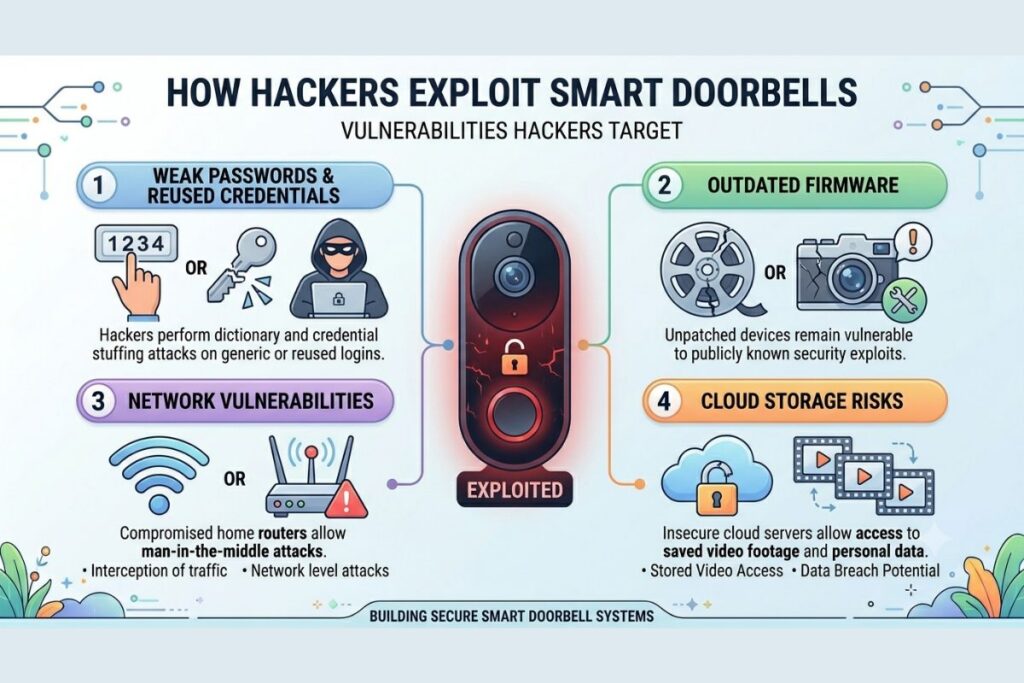
1. Weak Passwords and Reused Credentials
Hackers use automated tools to test login credentials. If you use the same password for multiple accounts, a previous breach could unlock your front door camera.
2. Outdated Firmware
Manufacturers frequently release patches. Failing to update leaves devices exposed. Hackers often scan for outdated versions, which can be exploited easily.
3. Network Vulnerabilities
Most smart doorbells rely on WiFi. If your network is unsecured or uses outdated encryption (like WEP), your device is an open target. Segmented networks for IoT devices can mitigate this risk.
4. Cloud Storage Risks
Video and audio are stored in the cloud. A breach or vulnerability on the provider’s side can expose sensitive footage to third parties. Always check data retention policies and access controls.
Privacy Risks You Can’t Ignore
A smart doorbell doesn’t just record your porch. Depending on placement, it may capture:
- Neighbors and pedestrians
- Delivery personnel
- Vehicles
- Public areas
This can have legal and ethical implications. Cloud storage might keep recordings indefinitely. Once your data is online, control is limited.
The IoT Explosion: Why One Device Can Compromise Your Entire Home
Smart doorbells are just the tip of the iceberg. Most homes now contain dozens of connected devices:
- Smart TVs
- Thermostats
- Locks
- Lights
- Appliances
Every device adds to the attack surface. A single vulnerability in one IoT device can allow lateral movement across your network. Network segmentation, strong WiFi encryption, and vigilant monitoring are essential for smart doorbell security.
How to Protect Yourself
Here’s a practical roadmap:
- Strong, unique passwords: Avoid reusing credentials across accounts.
- Enable multi-factor authentication: Adds a critical layer of protection.
- Update firmware regularly: Don’t ignore manufacturer alerts.
- Secure your WiFi: Use WPA3 if available. Avoid outdated protocols.
- Limit cloud storage: Delete unnecessary recordings and check permissions.
- Monitor access: Remove unused accounts and review user permissions.
Cybersecurity isn’t just technology—it’s a habit. Awareness and vigilance matter as much as software features.
Questions to Ask Before Buying
- How frequently are security updates released?
- Does it support multi-factor authentication?
- Where is your data stored?
- Can you control privacy settings?
- How is data encrypted?
These questions reveal the real-world security posture of a device. Don’t focus solely on camera resolution or motion detection. Security should always come first.
The Future of Smart Doorbell Security
AI and machine learning are integrating into smart doorbells. Features like facial recognition, package detection, and behavior analysis improve convenience—but also introduce new vulnerabilities.
The more complex the device, the greater the opportunity for exploitation. Hackers constantly adapt.
Smart homeowners must stay informed. Knowledge, awareness, and proactive security practices are what separate victims from the protected.
For more practical cybersecurity education, visit FileCorrupter.org.
Frequently Asked Questions
Can my smart doorbell be hacked?
Yes. Weak passwords, outdated firmware, and unsecured networks can allow attackers to access your doorbell and its data.
Are smart doorbells safer than traditional ones?
They improve visibility but introduce cybersecurity and privacy risks not present in traditional doorbells.
How do I know if my doorbell is vulnerable?
Check for outdated firmware, weak passwords, cloud storage settings, and WiFi security protocols.
Should I enable multi-factor authentication?
Absolutely. It significantly reduces unauthorized access risks.
Final Thought
Smart technology offers convenience, but it also shifts responsibility directly to the homeowner. A smart doorbell feels harmless until it becomes a surveillance tool for someone with malicious intent. Every motion alert, every video feed, every connected feature is a potential vulnerability if overlooked.
Cybersecurity isn’t abstract—it’s now personal. The homes of tomorrow will be full of intelligent devices, and those who ignore the risks will pay the price. Being aware, proactive, and educated about your devices is no longer optional. It’s a matter of privacy, safety, and control.
The smartest homeowners aren’t those who buy every new gadget—they’re the ones who understand them, protect them, and never assume convenience equals security. Your smart doorbell may be watching for you—but someone else could be watching you.
Explore More Free Tools
Hash Generator Tool
Generate secure MD5, SHA1, SHA256, and other cryptographic hashes instantly online.
Open Tool →Dummy File Generator
Create sample dummy files of custom sizes for testing uploads, storage, and applications.
Open Tool →Password Strength Checker
Analyze password security and identify weak passwords before using them online.
Open Tool →File Hash Checker
Verify file integrity by checking MD5, SHA256, and other file hash signatures.
Open Tool →UUID Generator
Generate random UUIDs and unique identifiers instantly for apps, APIs, and databases.
Open Tool →Text Diff Checker
Compare two text blocks side by side and quickly detect additions, deletions, and edits.
Open Tool →