
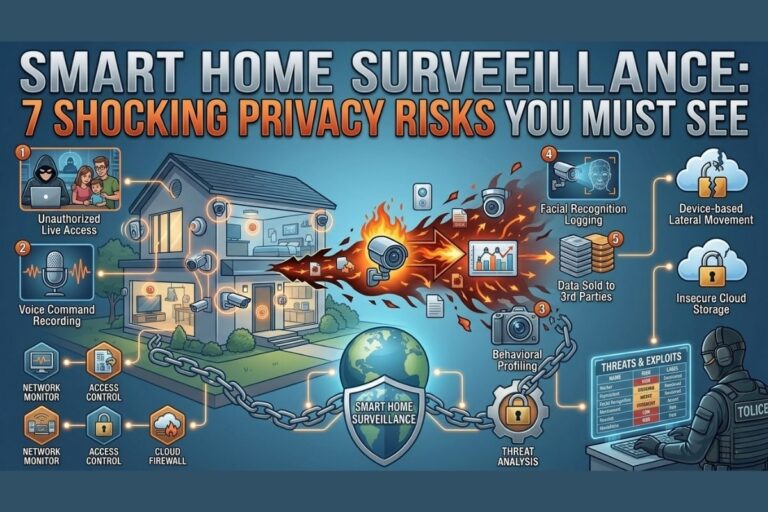
The television on your wall is watching. The speaker on your counter is listening. The camera above your front door is recording. Every connected device quietly collects information about your life, and the companies behind them know more about your habits, preferences, and routines than most of your friends.
Smart Home Surveillance is real, pervasive, and growing faster than most people realize. Millions of households have invited devices into their homes for convenience. Thermostats learn your schedule. Voice assistants respond to commands. Security cameras monitor every movement. Smart TVs track what you watch. Each device may feel helpful, but combined, they build an incredibly detailed profile of your life.
The question isn’t whether Smart Home Surveillance exists. The question is how much you understand what’s happening in your own home.
What Is Smart Home Surveillance?
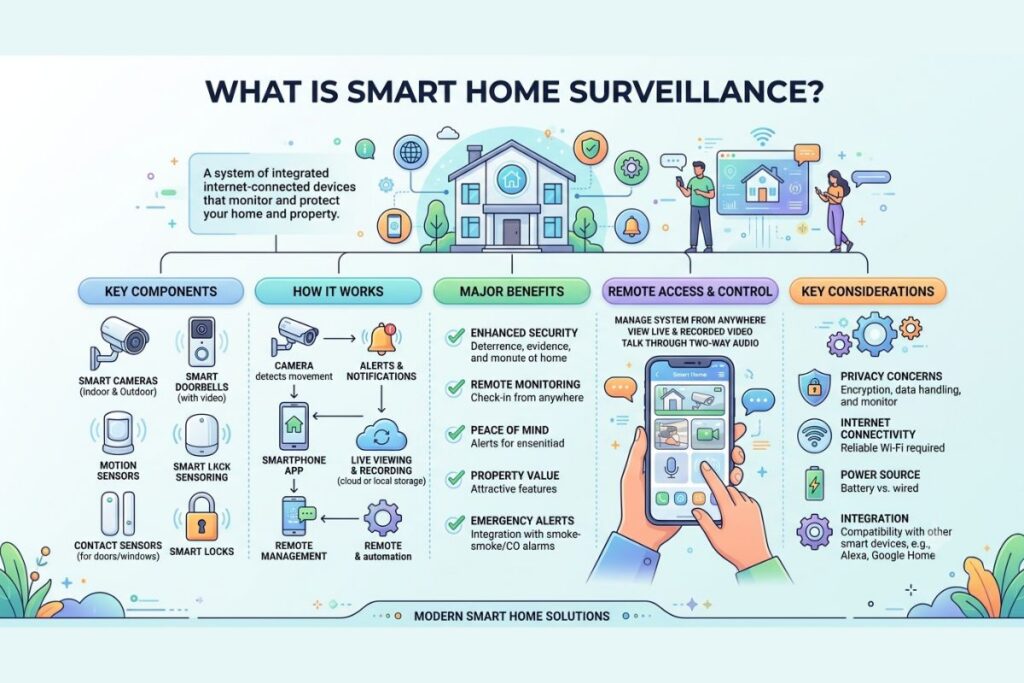
Smart Home Surveillance is the collection, monitoring, and analysis of data generated by connected devices inside your home. It’s more than just cameras—it includes smart speakers, thermostats, locks, lighting systems, and more. These devices often gather information continuously, which companies use to personalize experiences, target advertising, and analyze behavior.
According to the Electronic Frontier Foundation, many devices collect far more data than users realize. Most homeowners never review privacy settings or read data sharing agreements, which leaves them vulnerable.
Smart TVs: More Than Just Entertainment
Modern smart TVs track every show you watch, regardless of platform. Technologies like Automatic Content Recognition monitor content to generate insights about your preferences. This data is valuable to advertisers and can reveal personal interests, lifestyle choices, political leanings, and emotional patterns. The Federal Trade Commission has investigated TV manufacturers for excessive data collection practices, highlighting the hidden surveillance happening in your living room.
Voice Assistants Are Always Listening
Devices like Amazon Alexa and Google Assistant continuously listen for activation words. Accidental recordings are common, capturing private conversations you may never want recorded. Trusting companies to manage this data responsibly is not a cybersecurity strategy—verification is.
Security Cameras and Video Doorbells: Double-Edged Swords
Security devices are meant to protect, but improperly secured cameras and doorbells can become liabilities. Weak passwords, outdated firmware, and cloud vulnerabilities provide attackers with opportunities to monitor activity, gather intelligence, or harass residents. The Cybersecurity & Infrastructure Security Agency warns about these vulnerabilities. A compromised camera can turn a security tool into a privacy nightmare.
Data Brokers: Watching Behind the Scenes
Hackers are not the only threat. Data brokers collect information from multiple sources to create detailed profiles on consumers. Smart device data feeds into these profiles, giving companies insight into your routines, shopping habits, and behavior patterns. Most people never realize this surveillance economy exists.
Mapping Your Life, One Device at a Time
Your thermostat knows when you wake up. Your smart lock records when doors open. Cameras track visitors. Lights monitor movement. Voice assistants log commands. Individually, each seems harmless. Together, they produce a blueprint of your life. Predictable routines can be exploited by criminals or malicious actors. Smart Home Surveillance doesn’t just track data—it maps behavior.
Also Read: SCADA Exploitation Techniques: How Hackers Hijack Industrial Control Systems
Cybercriminals Exploit Weaknesses
Many smart devices prioritize convenience over security. Default passwords, ignored firmware updates, and open networks provide easy targets. Botnets like Mirai have shown how vulnerable devices can be weaponized on a massive scale. Cybercriminals exploit these gaps to steal data, invade privacy, or launch attacks. Every unprotected device is a potential entry point.
Artificial Intelligence Amplifies Surveillance
AI in smart devices improves convenience but increases surveillance. Systems can recognize faces, predict routines, and automate decisions. The more data collected, the more effective the AI becomes. While helpful, these capabilities intensify privacy concerns, making informed consumer awareness more critical than ever.
Protecting Yourself Against Smart Home Surveillance
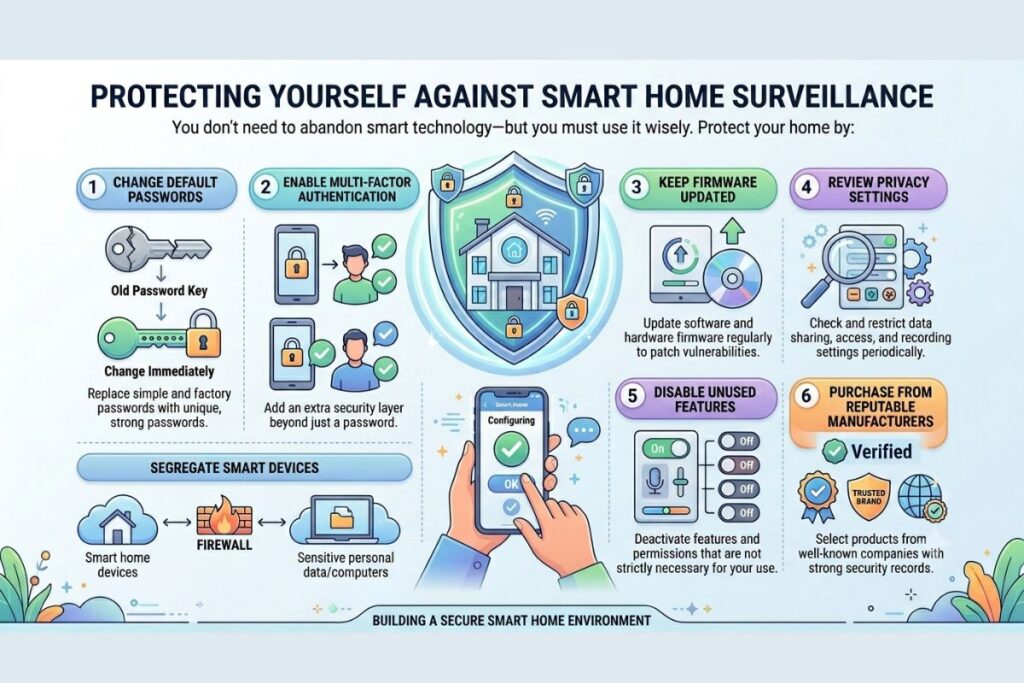
You don’t need to abandon smart technology—but you must use it wisely. Protect your home by:
- Changing default passwords immediately.
- Enabling multi-factor authentication.
- Keeping firmware and software updated.
- Reviewing privacy settings regularly.
- Disabling features you don’t use.
- Purchasing devices from reputable manufacturers.
- Segregating smart devices from sensitive networks.
Educating yourself is the strongest defense. For guidance on connected device security, AI threats, and healthcare cybersecurity, explore FileCorrupter.org.
FAQs
Is Smart Home Surveillance always harmful? No. Devices can be useful, but risk arises when users fail to secure them or understand data collection practices.
Can hackers access smart home devices? Yes. Weak passwords, outdated software, and insecure networks make devices vulnerable.
Which smart devices collect the most data? Smart speakers, televisions, security cameras, video doorbells, thermostats, and voice assistants.
How can I improve smart home security? Use strong passwords, enable multi-factor authentication, update devices regularly, review privacy settings, and separate devices from sensitive networks.
Final Thought
Privacy is more than a concept—it is a fundamental right and the backbone of autonomy in the digital age. Every device in your home is silently observing, recording, and transmitting details about your life. Each command you speak, every show you watch, each step you take inside your home, contributes to a digital shadow that exists beyond your control. The implications are profound: patterns of behavior can be exploited by criminals, corporations, or even governments. Awareness alone is not enough; you must act deliberately to protect your personal life.
Imagine a home where your movements, habits, and conversations are no longer private, where convenience has been bought at the expense of control. The devices intended to improve your life now hold the power to dictate it. The most insidious aspect of Smart Home Surveillance is that you may never see it coming—your trust is the gateway to exposure.
Your responsibility is to reclaim the narrative. Change passwords, enable strong authentication, segregate networks, and educate yourself on the data being collected. Understand not just what these devices do, but what they allow others to know about you. The future is increasingly connected, but your privacy is not negotiable. Every device you invite into your home carries a choice: convenience or control, exposure or awareness. Recognize the trade-offs. Protect your autonomy. Because the smartest device in your home should never be the one watching you, and the power to safeguard your life begins with your understanding of the surveillance you’ve welcomed inside.
Explore More Free Tools
Hash Generator Tool
Generate secure MD5, SHA1, SHA256, and other cryptographic hashes instantly online.
Open Tool →Dummy File Generator
Create sample dummy files of custom sizes for testing uploads, storage, and applications.
Open Tool →Password Strength Checker
Analyze password security and identify weak passwords before using them online.
Open Tool →File Hash Checker
Verify file integrity by checking MD5, SHA256, and other file hash signatures.
Open Tool →UUID Generator
Generate random UUIDs and unique identifiers instantly for apps, APIs, and databases.
Open Tool →Text Diff Checker
Compare two text blocks side by side and quickly detect additions, deletions, and edits.
Open Tool →