
Most people think cybersecurity breaches are about stolen passwords, leaked emails, or financial fraud.
In healthcare, the consequences are far more dangerous.
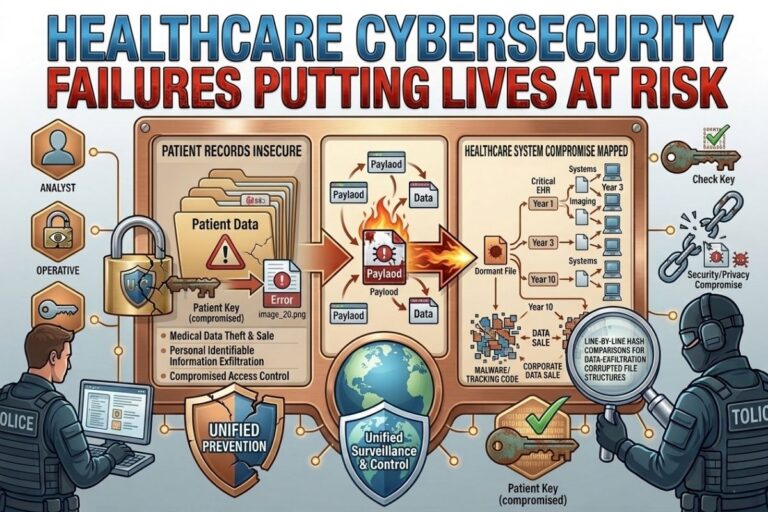
Healthcare cybersecurity failures can shut down hospitals, delay emergency treatment, disable medical systems, compromise life saving devices, and place real human lives in immediate danger. The healthcare industry has become one of the most aggressively targeted sectors in modern cybercrime because attackers understand a brutal reality that many people still fail to recognize.
Hospitals cannot afford downtime.
That pressure makes healthcare systems incredibly vulnerable to ransomware, extortion, and operational disruption. Cybercriminals know that healthcare organizations are more likely to pay quickly when patient care is on the line. Every minute matters inside emergency rooms, intensive care units, surgical centers, and critical care facilities.
When cybersecurity collapses in healthcare environments, the damage extends far beyond stolen data.
People can die.
At FileCorrupter.org, understanding the real world impact of cybercrime means looking beyond headlines and recognizing how digital attacks increasingly affect physical safety, public trust, and human survival itself.
The uncomfortable truth is that modern healthcare depends heavily on interconnected digital systems, and many of those systems were never designed to withstand the level of cyber threats now targeting them daily.
That should concern everyone.
Healthcare Cybersecurity Failures Are Becoming a National Security Problem
Healthcare is no longer operating solely through paper records and isolated medical equipment. Modern hospitals rely on interconnected systems for patient records, diagnostic imaging, medication management, communication platforms, scheduling systems, and network connected medical devices.
That digital transformation improved efficiency in many ways.
It also dramatically expanded the attack surface.
Cybercriminals now target healthcare organizations because disrupting medical operations creates immediate pressure. Unlike other industries that can temporarily suspend operations after a cyberattack, hospitals often have no safe option to stop functioning.
Patients still need emergency surgery.
Ambulances still arrive.
Critical care patients still require treatment.
That urgency gives attackers leverage.
According to Cybersecurity and Infrastructure Security Agency, the healthcare and public health sector remains one of the most targeted areas of critical infrastructure in the United States.
The reason is obvious.
Healthcare organizations contain sensitive data, rely on continuous operations, and often struggle with aging technology infrastructure. Many hospitals operate with outdated systems because replacing medical technology is expensive, time consuming, and operationally difficult.
Unfortunately, cybercriminals understand those weaknesses extremely well.
📌 Recommended Reading
The Corruption Time Bomb: Dormant Files That Explode LaterRansomware Attacks Can Shut Down Entire Hospitals
Ransomware has become one of the most devastating threats facing healthcare organizations today. Attackers infiltrate systems, encrypt critical files, and demand payment in exchange for restoring access.
Inside a hospital environment, that scenario becomes terrifying quickly.
Electronic health records may become inaccessible. Imaging systems can stop functioning. Medication management platforms may fail. Staff communication systems can collapse entirely. In some cases, hospitals have been forced to divert ambulances, postpone surgeries, and delay critical procedures because cyberattacks disrupted operations so severely.
Those delays can become deadly.
When emergency treatment slows down, patients suffer the consequences.
Healthcare cybersecurity failures are not theoretical risks anymore. Real hospitals around the world have experienced major operational disruption due to ransomware attacks. According to FBI Cyber Division, ransomware groups continue targeting healthcare organizations because they understand how vulnerable critical care operations become during system outages.
The psychological pressure on healthcare institutions is enormous.
Cybercriminals know hospitals cannot easily tolerate downtime. That creates a dangerous environment where attackers weaponize urgency itself.
This is not simply financial cybercrime anymore.
It is digital coercion targeting critical human infrastructure.
Image Steganography Tool
Hide or extract secret data inside images instantly.
Connected Medical Devices Create Serious Security Risks
One of the most overlooked dangers in healthcare cybersecurity involves connected medical devices. Modern healthcare increasingly relies on internet connected technologies such as infusion pumps, pacemakers, insulin pumps, heart monitors, imaging systems, and remote patient monitoring equipment.
These devices improve patient care significantly.
They also create new vulnerabilities.
Many medical devices were designed primarily for functionality and reliability, not cybersecurity resilience. Some operate on outdated software, lack proper encryption, or cannot easily receive security updates without disrupting patient care.
That creates serious problems.
If attackers compromise connected medical devices, the consequences could extend beyond data theft into direct patient safety risks. Researchers have repeatedly demonstrated vulnerabilities in life sustaining technologies, including pacemakers and insulin delivery systems.
The possibility of malicious interference with medical equipment is no longer science fiction.
It is a legitimate cybersecurity concern.
According to U.S. Food and Drug Administration Cybersecurity Guidance, medical device cybersecurity remains a growing priority due to increasing threats against connected healthcare technology.
As healthcare systems continue expanding digital infrastructure, securing these devices becomes absolutely critical.
Because when vulnerable technology interacts directly with human lives, cybersecurity failures become physical safety failures.
Healthcare Workers Are Already Overwhelmed
Cybersecurity in healthcare is not only a technology issue.
It is also a human issue.
Doctors, nurses, technicians, and hospital administrators already operate under enormous pressure. Long shifts, emotional exhaustion, staffing shortages, and nonstop decision making create environments where mistakes become more likely.
Cybercriminals exploit that reality aggressively.
Phishing attacks targeting healthcare workers often succeed because employees are overwhelmed, distracted, or rushing through critical tasks. A single malicious email can compromise entire hospital systems if proper protections fail.
Healthcare cybersecurity failures often begin with human vulnerability.
Attackers understand psychology extremely well. They use urgency, fear, authority, and emotional manipulation to bypass security awareness. In fast paced medical environments, staff members may not have time to analyze every suspicious message carefully.
That creates dangerous conditions.
The healthcare industry cannot rely solely on technical defenses. Human centered cybersecurity training, operational resilience, and realistic incident response planning are equally important.
Because cybersecurity is no longer separate from patient care.
It is part of patient care.
Outdated Healthcare Infrastructure Is Creating Massive Vulnerabilities
Many hospitals continue operating on aging systems because replacing healthcare infrastructure is incredibly expensive and operationally complex. Some medical environments still depend on outdated operating systems, unsupported software, and legacy technology that modern cybersecurity defenses struggle to protect effectively.
This creates major exposure.
Cybercriminals actively search for vulnerable systems running outdated software because they are easier to compromise. Once attackers gain access, they can move laterally across networks, disrupt operations, steal sensitive information, and deploy ransomware throughout entire healthcare environments.
The healthcare industry faces a difficult balancing act.
Hospitals must maintain uninterrupted patient care while also modernizing cybersecurity defenses against increasingly sophisticated threats. Unfortunately, limited budgets and operational pressures often delay security upgrades until after major incidents occur.
That reactive approach is dangerous.
Healthcare cybersecurity failures become far more likely when organizations rely on outdated infrastructure while facing modern cyber threats driven by automation, artificial intelligence, and advanced social engineering techniques.
Cybercrime continues evolving rapidly.
Healthcare defenses often do not.
The Human Cost of Healthcare Cybersecurity Failures
The healthcare industry stores some of the most sensitive information in existence. Medical histories, prescription data, insurance information, mental health records, diagnostic reports, and bio-metric information create valuable targets for cybercriminals.
But data theft is only part of the problem.
The larger issue is operational disruption.
When hospitals lose access to critical systems, patient care suffers immediately. Emergency response slows down. Surgeries get delayed. Diagnostic systems become unavailable. Staff communication deteriorates. Treatment decisions become harder to make under pressure.
Every second matters in healthcare environments.
Cybersecurity failures can create life threatening consequences rapidly.
This is why healthcare cybersecurity deserves far more public attention than it currently receives. Most people do not think about hospital cybersecurity until a major attack makes headlines, but the risks are growing constantly behind the scenes.
Healthcare systems are now part of critical national infrastructure.
Protecting them is not optional.
Healthcare Cybersecurity Must Become a Priority
The future of healthcare will depend heavily on digital systems, connected technologies, artificial intelligence, remote monitoring, and network integrated medical devices. That transformation creates incredible opportunities for patient care, but it also introduces serious cybersecurity risks that cannot be ignored.
Healthcare organizations must invest more aggressively in:
- cybersecurity modernization
- staff awareness training
- incident response planning
- network segmentation
- medical device security
- ransomware resilience
- threat monitoring
- infrastructure upgrades
The cost of ignoring these issues is becoming too high.
Cybersecurity is no longer just an information technology problem buried inside hospital networks.
It is a patient safety issue.
It is a public trust issue.
And increasingly, it is a matter of life and death.
Healthcare cybersecurity failures can kill people.
That reality is no longer hypothetical.
It is happening now.
Frequently Asked Questions
Why are healthcare organizations targeted so heavily by cybercriminals?
Healthcare organizations are attractive targets because hospitals cannot afford operational downtime. Cybercriminals understand that disrupting patient care creates enormous pressure on healthcare providers to restore systems quickly. Medical institutions also store highly sensitive personal, financial, and medical data that can be exploited or sold.
Can cyberattacks actually affect patient safety?
Yes. Healthcare cybersecurity failures can delay surgeries, disrupt emergency response systems, disable diagnostic equipment, interrupt communication between medical staff, and compromise connected medical devices. In severe cases, operational disruption can directly impact patient outcomes and place lives at risk.
What are the biggest cybersecurity weaknesses inside hospitals?
Many hospitals struggle with outdated infrastructure, unsupported software, limited cybersecurity budgets, staffing shortages, and network connected medical devices that were not originally designed with strong cybersecurity protections. Human error and phishing attacks also remain major vulnerabilities in healthcare environments.
How can healthcare organizations improve cybersecurity protection?
Healthcare providers can strengthen cybersecurity by modernizing outdated systems, improving employee security awareness training, implementing multi factor authentication, segmenting networks, monitoring threats continuously, securing medical devices, and developing stronger incident response plans before attacks occur.
Final Thoughts
Healthcare cybersecurity failures expose one of the most dangerous realities of the digital age.
Modern hospitals are no longer just buildings filled with doctors, nurses, and medical equipment. They are highly connected digital environments that depend on secure networks, reliable systems, and uninterrupted access to critical information every second of every day.
That dependency creates enormous risk.
Cybercriminals understand that hospitals operate under pressure where downtime is unacceptable and patient care cannot simply pause during a cyberattack. That makes healthcare one of the most vulnerable and strategically valuable targets in modern cybercrime.
The frightening part is that many healthcare systems are still trying to defend against rapidly evolving threats while relying on aging infrastructure, overwhelmed staff, and outdated security models.
That gap is becoming increasingly dangerous.
Cybersecurity in healthcare is no longer just about protecting records or preventing financial theft. It is about protecting emergency response systems, life saving technology, patient safety, and public trust itself.
The future of healthcare will become even more connected through artificial intelligence, remote monitoring, cloud infrastructure, and internet connected medical devices. Without stronger cybersecurity protections, those advancements could introduce even greater vulnerabilities into systems people depend on to survive.
Healthcare cybersecurity failures can kill people.
That sentence should not sound dramatic anymore.
It should sound urgent.
😄 Cyber Joke
Why did the hospital upgrade its cybersecurity system?
Because ransomware is a terrible second opinion! 😄
Explore More Free Tools
Hash Generator Tool
Generate secure MD5, SHA1, SHA256, and other cryptographic hashes instantly online.
Open Tool →Dummy File Generator
Create sample dummy files of custom sizes for testing uploads, storage, and applications.
Open Tool →Password Strength Checker
Analyze password security and identify weak passwords before using them online.
Open Tool →File Hash Checker
Verify file integrity by checking MD5, SHA256, and other file hash signatures.
Open Tool →UUID Generator
Generate random UUIDs and unique identifiers instantly for apps, APIs, and databases.
Open Tool →Text Diff Checker
Compare two text blocks side by side and quickly detect additions, deletions, and edits.
Open Tool →