
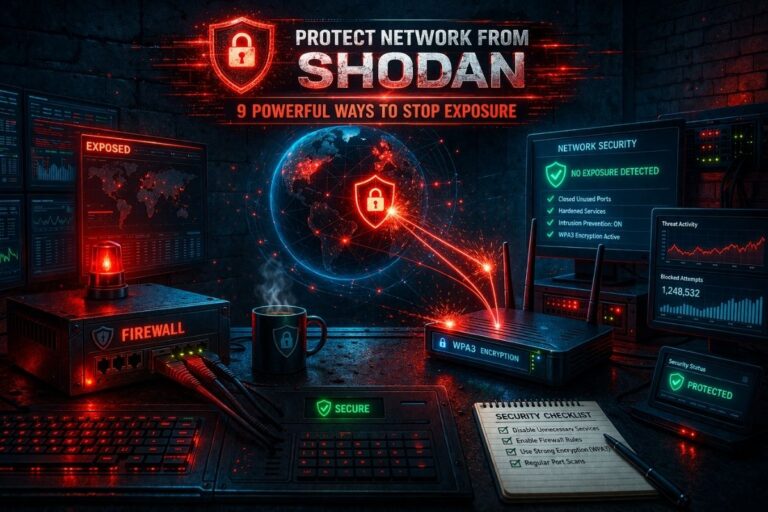
Modern cybersecurity is no longer just about defending systems from malware or phishing attacks. One of the most overlooked security risks comes from something much simpler: visibility. If systems are visible on the public internet, they can be discovered, analyzed, and targeted long before an attack ever begins.
This is why organizations must learn how to protect network from Shodan exposure.
Shodan continuously scans the internet, cataloging devices and services that respond to network requests. When systems respond to these scans, they often reveal valuable information about the technology running behind them. That information becomes searchable in Shodan’s database.
For security professionals, this visibility can help identify security weaknesses. For attackers, it can serve as a reconnaissance tool that reveals potential entry points.
Understanding how to protect network from Shodan scanning is an essential step toward reducing an organization’s attack surface.
Why Organizations Must Protect Network From Shodan
The internet is constantly scanned by automated tools searching for exposed systems. Some of these tools are operated by security researchers, while others are used by attackers looking for vulnerable infrastructure.
Shodan simply organizes the information that these scans reveal.
When a system responds to a network request, it often provides a service banner that contains details about the software running on the device. These banners may include the server type, software version, operating system, or configuration information.
This data can provide attackers with valuable intelligence.
For example, if a server responds with a banner revealing an outdated application version, attackers may search for known vulnerabilities affecting that software. If a remote management interface is visible, attackers may attempt authentication attacks.
The goal of defensive cybersecurity is to limit how much information attackers can gather about your infrastructure.
Organizations that actively protect network from Shodan exposure significantly reduce the likelihood that attackers will identify weaknesses during reconnaissance.
📌 Recommended Reading
Shodan Port Scanning: How Hackers Find Exposed SystemsHow Shodan Identifies Exposed Systems
To understand how to protect network from Shodan, it is important to understand how Shodan performs scanning.
The platform continuously scans global IP ranges, sending connection requests to common service ports. When a system responds, the response is recorded along with the IP address and other identifying information.
These responses often contain service banners that reveal details about the system.
For example, a web server may reveal the web server software it is running. A remote access service might reveal authentication prompts or configuration details. Industrial control systems, cameras, routers, and IoT devices may also reveal identifying information.
Over time, this data forms a massive database of internet-connected infrastructure.
If your system responds publicly, there is a strong chance it will eventually appear in Shodan search results.
This is why minimizing unnecessary exposure is one of the most effective defensive strategies.
Reduce Unnecessary Open Ports
One of the most effective ways to protect network from Shodan exposure is to eliminate unnecessary open ports.
Every open port represents a service that can communicate with external systems. If a service is not required to be accessible from the public internet, it should not be exposed.
Organizations often discover open ports that were left accessible during testing or development. These forgotten services can remain visible for months or even years.
Regular network audits help identify these exposures.
By closing unused ports and restricting unnecessary services, organizations significantly reduce the number of systems visible to internet scanning tools.
Use Firewalls and Network Segmentation
Another important strategy to protect network from Shodan involves controlling how network traffic flows between systems.
Firewalls serve as the first line of defense between internal infrastructure and the public internet. Properly configured firewalls allow only authorized traffic to reach specific services.
Network segmentation adds another layer of protection.
Instead of allowing direct access to internal systems, segmentation separates sensitive resources into isolated environments. Even if one service becomes exposed, segmentation prevents attackers from easily moving deeper into the network.
These controls significantly reduce the effectiveness of reconnaissance tools.
Remove Service Banner Information
Many systems unintentionally reveal identifying information through service banners. These banners often display software names, versions, and configuration details.
Attackers frequently use this information to determine which vulnerabilities may affect a system.
One way to protect network from Shodan discovery is to reduce the amount of information that services reveal when they respond to connection requests.
Administrators can configure servers to hide version information or limit banner responses. While this does not eliminate exposure entirely, it reduces the intelligence available to attackers.
Less information means fewer clues about the technology running behind a service.
Monitor Your Organization in Shodan
One of the most effective defensive strategies is to monitor your own infrastructure through the same tools attackers use.
Organizations that want to protect network from Shodan exposure should periodically search Shodan for their own IP ranges and domains.
If unexpected systems appear in the results, administrators can investigate and correct the exposure.
This process helps identify forgotten servers, outdated services, or cloud deployments that were unintentionally left accessible.
By monitoring external visibility, organizations gain a clearer picture of how their infrastructure appears from the outside world.
Keep Systems Updated
Outdated software remains one of the most common weaknesses discovered through internet scanning tools.
When vulnerabilities are publicly disclosed, attackers often search for systems that still run the affected software. Shodan makes this process easier by revealing technologies and versions running on exposed systems.
Organizations that protect network from Shodan exposure must ensure that internet-facing services are consistently updated.
Regular patch management helps eliminate vulnerabilities before attackers can exploit them.
Maintaining updated systems is one of the simplest and most effective cybersecurity practices.
External Cybersecurity Resources
Security professionals interested in learning more about internet scanning and exposure risks can explore the official Shodan platform:
Additional cybersecurity guidance on protecting internet-facing infrastructure can be found through the Cybersecurity and Infrastructure Security Agency (CISA):
These resources provide valuable insights into identifying and securing exposed services.
Conclusion
Learning how to protect network from Shodan exposure is an essential part of modern cybersecurity. As the internet continues to grow, the number of connected devices and services increases dramatically. Each of these systems has the potential to reveal information about the infrastructure behind it.
Shodan highlights how easily exposed services can be discovered by anyone scanning the internet. For organizations, this visibility creates both a challenge and an opportunity.
The challenge lies in recognizing that systems connected to the internet cannot remain hidden. The opportunity lies in identifying exposures before attackers do.
By reducing unnecessary open ports, controlling network traffic, limiting information disclosure, and monitoring external visibility, organizations can significantly reduce their attack surface.
Cybersecurity is ultimately about controlling risk. Understanding how scanning tools like Shodan reveal internet-facing infrastructure allows organizations to manage that risk more effectively.
When systems are properly secured and unnecessary services are removed, the information visible to scanning platforms becomes far less useful to attackers.
😄 Cyber Joke
Why did the admin hide his server from Shodan?
Because he didn’t want hackers saying, “Nice setup, mind if I join?” 😄