Digital Identity Is More Valuable Than Most People Realize
Most people never think about it until something goes wrong.
Ask someone what the most valuable thing they own is and you will hear familiar answers.
A house.
A business.
A retirement account.
An investment portfolio.
A family heirloom.
A vehicle.
Very few people will give the correct answer.
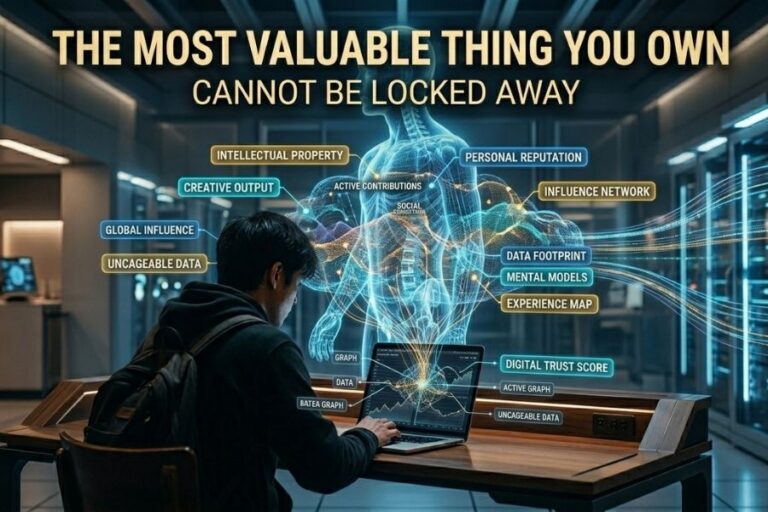
The most valuable thing you own cannot be placed inside a vault.
It cannot be hidden in a safe.
It cannot be locked behind steel doors.
It cannot be stored in a safety deposit box.
Because it is not a physical object.
It is your Digital Identity.
In the modern world, your Digital Identity influences nearly every important aspect of your life. It affects your finances, your reputation, your opportunities, your security, and increasingly, how organizations interact with you.
A criminal may never meet you.
They may never visit your home.
They may never touch your property.
Yet if they gain control of your Digital Identity, they can cause enormous damage.
That reality should make every reader pause.
For decades, society measured wealth through physical assets.
Today, some of the most valuable assets are invisible.
Identity is one of them.
Your Digital Identity Is Worth More Than Your Devices
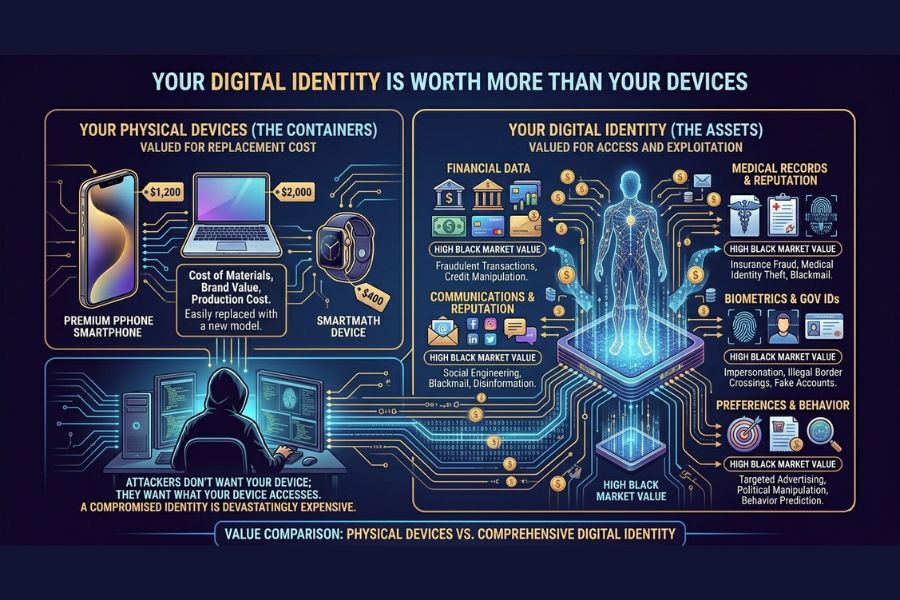
Many people spend thousands of dollars protecting devices.
They purchase antivirus software.
They install security tools.
They buy new phones and computers.
They update operating systems.
Those efforts are important.
Yet they often overlook the thing those devices are actually protecting.
Identity.
A stolen laptop can be replaced.
A compromised smartphone can be replaced.
A damaged hard drive can be replaced.
Your Digital Identity is far more difficult to restore.
When identity is compromised, the consequences extend beyond hardware.
Accounts become vulnerable.
Relationships become vulnerable.
Trust becomes vulnerable.
Opportunities become vulnerable.
The device itself is rarely the primary target.
The information connected to the device is.
This distinction matters because it changes how people think about cybersecurity.
The goal is not merely protecting technology.
The goal is protecting identity.
Technology is simply one of the tools involved.
Criminals Do Not Want Your Computer
They Want You.
This is one of the most misunderstood concepts in cybersecurity.
People often imagine attackers sitting in dark rooms searching for machines.
The reality is more personal.
Modern attackers frequently target people.
The computer is simply the pathway.
The smartphone is simply the pathway.
The email account is simply the pathway.
The true objective is often identity.
Identity provides access.
Identity provides influence.
Identity provides opportunity.
A successful attack against a Digital Identity can create pathways into financial accounts, social platforms, business systems, professional relationships, and personal communications.
This is why phishing remains one of the most effective attack methods in the world.
Phishing attacks do not succeed because technology fails.
They succeed because trust fails.
Attackers understand something many people do not.
A trusted identity is often more valuable than a device.
A thief can steal a computer once.
Someone who controls an identity can continue benefiting long after the hardware is gone.
That difference explains why identity has become such a valuable target.
Also Read: Your Digital Twin Already Exists
Your Reputation Is Part of Your Digital Identity
Most people associate Digital Identity with usernames, passwords, and account access.
Those elements matter.
But they represent only part of the picture.
Your reputation is also part of your Digital Identity.
Every post.
Every comment.
Every interaction.
Every professional achievement.
Every public statement.
Together they contribute to a digital representation of who you are.
This is one reason online reputation has become increasingly important.
Employers review information.
Clients review information.
Universities review information.
Organizations review information.
People form opinions based on digital evidence.
The internet has become one of the largest reputation systems ever created.
That creates opportunities.
It also creates risks.
A damaged reputation can affect careers.
A damaged reputation can affect relationships.
A damaged reputation can affect trust.
Trust is difficult to build.
Trust is easy to lose.
The value of Digital Identity extends far beyond technical systems because identity and reputation are deeply connected.
Artificial Intelligence Is Expanding the Value of Identity
Artificial intelligence is changing how information is collected, analyzed, and understood.
That change is increasing the value of Digital Identity.
For years, organizations collected information because humans could review it.
Now machines can process information on an extraordinary scale.
Patterns emerge faster.
Insights emerge faster.
Predictions become more accurate.
The result is a world where Digital Identity carries increasing significance.
Every search.
Every purchase.
Every interaction.
Every preference.
Every behavioral pattern.
These pieces contribute to larger profiles that help organizations understand individuals.
Some uses are beneficial.
Security systems can identify unusual activity.
Fraud detection systems can recognize suspicious behavior.
Services can become more personalized.
Yet increased capability also creates new risks.
The more accurately systems understand identity, the more valuable that identity becomes.
Value attracts attention.
Attention attracts competition.
Competition attracts abuse.
This is why Digital Identity will remain one of the most important cybersecurity discussions of the coming decade.
The organizations that understand identity possess significant advantages.
The organizations that protect identity build trust.
The organizations that ignore identity create risk.
At FileCorrupter.org, we often discuss the intersection of cybersecurity, privacy, and technology. Few topics sit closer to that intersection than Digital Identity because it touches every aspect of modern life.
The future will belong to organizations that understand information.
But it will also belong to individuals who understand the value of protecting their identity before someone else decides to use it.
Every Data Breach Is Really an Identity Breach
When most people hear about a data breach, they focus on numbers.
Ten thousand records exposed.
One million records stolen.
One hundred million accounts compromised.
The numbers dominate the headlines.
What those numbers actually represent is something far more personal.
Identity.
Behind every breached record is a person.
A name.
An email address.
A phone number.
A password.
A financial account.
A medical record.
A collection of information that contributes to an individual’s Digital Identity.
This is why data breaches continue creating consequences long after news coverage fades away.
The stolen information often survives.
It circulates through criminal marketplaces.
It gets combined with other information.
It becomes part of larger profiles.
The breach itself may end.
The effects often continue.
Many organizations focus on protecting databases.
That is important.
The deeper objective should be protecting the identities contained within those databases.
Because every breach ultimately affects people.
Not spreadsheets.
Not servers.
Not applications.
People.
That perspective changes the conversation.
It reminds us that cybersecurity is not simply about technology.
It is about protecting trust.
Use Our Free Image Steganography Tool
The Internet Built an Economy Around Identity
Few people realize how much of the modern economy depends on identity.
Banks depend on identity.
Healthcare systems depend on identity.
Employers depend on identity.
Governments depend on identity.
Technology platforms depend on identity.
Trust becomes possible because identity exists.
Without reliable identity systems, digital commerce becomes significantly more difficult.
The challenge is that identity has become incredibly valuable.
Anything valuable attracts attention.
Legitimate organizations want identity to provide services.
Advertisers want identity to understand behavior.
Data brokers want identity to build profiles.
Cybercriminals want identity because it creates opportunities for exploitation.
The modern internet did not simply create an information economy.
It created an identity economy.
Every login.
Every account.
Every verification process.
Every transaction.
Identity sits at the center.
The average person participates in this economy every day without realizing it.
That participation generates value.
It also generates risk.
The more dependent society becomes on digital systems, the more valuable Digital Identity becomes.
Why Digital Identity Has Become the World’s Most Valuable Asset
For centuries, wealth was measured through physical resources.
Land.
Gold.
Property.
Industrial infrastructure.
The digital age changed the equation.
Today, access often matters more than ownership.
And identity controls access.
Identity unlocks financial accounts.
Identity unlocks communication systems.
Identity unlocks professional opportunities.
Identity unlocks digital services.
Identity unlocks trust.
This is why the most valuable thing you own cannot be locked away.
Its value extends into nearly every part of modern life.
Imagine losing your wallet.
The inconvenience would be significant.
Now imagine losing control of your Digital Identity.
The consequences can extend for years.
Financial damage.
Reputational damage.
Emotional stress.
Administrative burdens.
Lost opportunities.
The recovery process can be exhausting.
A thief can steal money.
Someone controlling your identity can steal trust.
Trust is often far more difficult to replace.
That reality is why Digital Identity deserves far more attention than it receives.
People insure homes.
People insure vehicles.
People protect physical possessions.
Yet many neglect the asset that increasingly influences every other asset they own.
The Cost of Losing Control
One of the greatest mistakes people make is assuming identity theft is solely a financial issue.
It is not.
Identity affects relationships.
Identity affects careers.
Identity affects opportunities.
Identity affects confidence.
The damage often extends beyond monetary losses.
When trust becomes compromised, rebuilding it requires time and effort.
Organizations may question legitimacy.
Individuals may question authenticity.
Systems may require verification.
The burden falls on the victim.
This is why cybersecurity professionals place so much emphasis on identity protection.
Strong authentication.
Password management.
Account monitoring.
Privacy awareness.
These practices exist because prevention is usually easier than recovery.
The goal is not perfection.
The goal is reducing risk.
Digital Identity has become too valuable to ignore.
The Future of Security Is Identity
For years, cybersecurity focused heavily on protecting networks and devices.
Those areas remain important.
The future increasingly revolves around identity.
Organizations are moving toward identity centric security models because identity sits at the center of modern operations.
A secure network means little if attackers possess trusted credentials.
A secure device means little if attackers control legitimate accounts.
Identity has become the new perimeter.
That shift is changing how organizations think about security.
It is also changing how individuals should think about security.
The strongest defense is often not a piece of hardware.
It is awareness.
Understanding what identity is worth.
Understanding why it matters.
Understanding how attackers view it.
The future will reward people who treat identity as an asset rather than an afterthought.
Frequently Asked Questions
What is Digital Identity?
Digital Identity is the collection of information, credentials, behaviors, and attributes that represent an individual across digital systems and online environments.
Why is Digital Identity important?
Digital Identity influences access, trust, reputation, security, financial transactions, and opportunities throughout modern life.
How can I protect my Digital Identity?
Use strong unique passwords, enable multifactor authentication, monitor accounts regularly, limit unnecessary information sharing, and remain alert to phishing attempts.
Why do cybercriminals target Digital Identity?
Because Digital Identity provides access to valuable systems, accounts, information, and opportunities that can be exploited for financial or strategic gain.
Final Thought
Ask people what their most valuable possession is.
Most will point to something they can touch.
A house.
A car.
An investment account.
A business.
A collection of valuables.
They are looking in the wrong direction.
The most valuable thing you own cannot be carried.
It cannot be hidden.
It cannot be locked away.
It follows you everywhere.
It influences how systems recognize you.
It influences how organizations trust you.
It influences how opportunities find you.
It influences how the digital world responds to you.
It is your Digital Identity.
A thief can steal your wallet once.
Someone with your identity can steal from you for years.
That is why Digital Identity has become one of the most valuable assets in the modern world.
Your house can be rebuilt.
Your vehicle can be replaced.
Your money can be recovered.
But when trust in your identity is damaged, rebuilding it can take years.
The next decade of cybersecurity will not simply be about protecting devices.
It will be about protecting identity.
Because the most valuable thing you own was never sitting inside a vault.
It has been with you every time you logged in.
References
Identity Defined Security Alliance (IDSA)
Cybersecurity and Infrastructure Security Agency (CISA) Identity and Access Management Resources
Center for Internet Security (CIS) Digital Identity Guidance